As Employee Health Insurance vs Private Insurance: Which Is Better? takes center stage, this opening passage beckons readers with a wealth of information on the topic, ensuring a comprehensive understanding of the nuances between these two types of insurance.
Overview of Employee Health Insurance and Private Insurance
Employee Health Insurance and Private Insurance are two common types of insurance that individuals can opt for to secure their healthcare needs. While both serve the purpose of providing financial coverage for medical expenses, there are key differences between the two.
Differentiation between Employee Health Insurance and Private Insurance
Employee Health Insurance is typically offered by employers to their employees as part of their benefits package. It is a group insurance plan where the employer often covers a portion of the premium costs. On the other hand, Private Insurance is purchased directly by individuals or families from insurance companies, requiring them to pay the full premium amount.
Key Features of Employee Health Insurance and Private Insurance
- Employee Health Insurance:
- Often part of the employee benefits package.
- May have lower premium costs due to employer contributions.
- Usually covers a broad network of healthcare providers.
- May have limited customization options for coverage.
- Private Insurance:
- Individuals directly purchase the insurance plan.
- Higher premium costs paid entirely by the individual or family.
- Offers more flexibility in choosing coverage options.
- Allows individuals to select specific healthcare providers.
Significance of Employee Health Insurance and Private Insurance
Employee Health Insurance is crucial for employees as it provides them with access to healthcare coverage at a potentially lower cost, thanks to employer contributions. It offers a sense of security and financial protection against unexpected medical expenses. On the other hand, Private Insurance allows individuals to have more control over their coverage options and healthcare choices, catering to their specific needs and preferences.
It offers flexibility and customization that may not be available in employee health insurance plans.
Coverage and Benefits
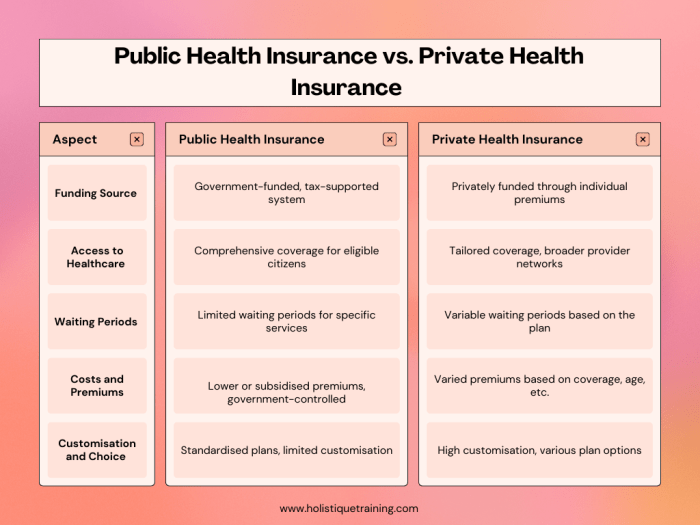
When comparing employee health insurance to private insurance, it is important to understand the differences in coverage and benefits provided by each type of insurance.Employee Health Insurance:Employee health insurance typically offers coverage for medical expenses related to illnesses and injuries that occur while the individual is employed by a specific company.
The coverage may vary depending on the employer and the specific plan offered, but it generally includes hospital stays, doctor visits, prescription medications, and preventive care services.Private Insurance:Private insurance, on the other hand, is purchased directly by individuals or families from insurance companies.
Private insurance plans offer a wider range of coverage options and benefits compared to employee health insurance. These plans often include coverage for dental care, vision care, alternative therapies, and other services not typically covered by employee health insurance.
Comparison of Coverage and Benefits
- Employee Health Insurance:
- Basic coverage for medical expenses while employed.
- May include preventive care services.
- Limited coverage options compared to private insurance.
- Private Insurance:
- Broader coverage options for various medical services.
- Additional benefits like dental and vision care.
- More flexibility in choosing coverage based on individual needs.
Scenarios Where One Type of Insurance Offers Better Coverage
- Private insurance may offer better coverage for individuals with specific medical needs that are not covered by employee health insurance, such as alternative therapies or specialized treatments.
- Employee health insurance may provide better coverage for routine medical expenses and preventive care services, as these are often included in the standard benefits package.
- Individuals who require frequent doctor visits or ongoing medical treatment may benefit from the comprehensive coverage options offered by private insurance plans.
Cost Analysis
When it comes to choosing between employee health insurance and private insurance, one crucial factor to consider is the cost implications. Understanding how premiums, deductibles, and out-of-pocket expenses differ between the two options can help individuals make an informed decision based on their financial situation.
Premiums
- Employee Health Insurance: Typically, premiums for employee health insurance are partially or fully covered by the employer, resulting in lower monthly costs for employees.
- Private Insurance: With private insurance, individuals are responsible for paying the full premium amount, which can be higher compared to employer-sponsored plans.
Deductibles and Out-of-Pocket Expenses
- Employee Health Insurance: Deductibles and out-of-pocket expenses are generally lower for employees with employer-sponsored plans, making healthcare more affordable when seeking medical services.
- Private Insurance: Private insurance plans may have higher deductibles and out-of-pocket expenses, requiring individuals to pay more upfront before insurance coverage kicks in.
Factors Impacting Overall Cost
- Healthcare Utilization: The frequency of medical services used can impact costs differently between employee health insurance and private insurance.
- Network Coverage: The provider networks associated with each insurance option can affect costs, with out-of-network services often resulting in higher expenses.
- Plan Customization: Private insurance plans offer more flexibility in coverage options, but this customization can come at a higher cost compared to standard employer-sponsored plans.
Flexibility and Customization
When it comes to choosing between employee health insurance and private insurance, one key factor to consider is the level of flexibility and customization each option offers. Let's delve into how these aspects can impact the overall satisfaction with the chosen insurance plan.
Flexibility in Coverage Options
Employee Health Insurance:
- Typically, employee health insurance plans offer a pre-determined set of coverage options.
- Employees may have some flexibility in choosing between different tiers of coverage, such as basic, standard, or premium plans.
- However, the range of coverage options may be limited compared to private insurance.
Private Insurance:
- Private insurance plans often provide a wider range of coverage options.
- Individuals have the flexibility to customize their coverage based on their specific needs and preferences.
- This can include choosing different deductibles, copayments, and coverage limits tailored to their individual circumstances.
Level of Customization Available
Employee Health Insurance:
- Customization options within employee health insurance plans are usually limited to the choices provided by the employer.
- Employees may not have the freedom to tailor the plan to their exact requirements.
Private Insurance:
- Private insurance offers a high level of customization, allowing individuals to select the coverage that best suits their needs.
- Policyholders can add or remove specific coverage elements, adjust deductibles and coverage limits, and even choose additional benefits like dental or vision coverage.
Impact on Overall Satisfaction
The flexibility and customization offered by private insurance can lead to higher overall satisfaction among policyholders. When individuals have the freedom to tailor their coverage to match their unique circumstances, they are more likely to feel that their insurance meets their specific needs.
On the other hand, the limited customization options in employee health insurance plans may leave some individuals feeling that their coverage is not as personalized or comprehensive as they would like.
Ultimate Conclusion
In conclusion, the discussion around Employee Health Insurance vs Private Insurance: Which Is Better? sheds light on the key differences and factors to consider when choosing the right insurance plan.
FAQ Resource
What are the key differences between employee health insurance and private insurance?
Employee health insurance is typically provided by employers and offers coverage for employees, whereas private insurance is purchased independently by individuals or families.
How do premiums differ between employee health insurance and private insurance?
Premiums for employee health insurance are often subsidized by the employer, resulting in lower costs for employees, while private insurance premiums are paid in full by the individual.
Which type of insurance offers more flexibility in choosing coverage options?
Private insurance generally offers more flexibility in choosing coverage options, as individuals can tailor their plans to suit their specific needs.